Crypto Taxes in Canada 2026: How to Report Crypto to the CRA
Canada taxes 50% of crypto capital gains and 100% of business income. How to calculate ACB, fill in Schedule 3 and T1135, and what CARF changes from 2027.
How Canadians buy and sell BTC, ETH and USDC for CAD: Interac, wire and card funding, trading fees from 0.20% to 1.5%, CSA purchase limits and CRA tax rules.

By Mikko Mikailov6 min read

A Canadian who buys Bitcoin, Ethereum or USDC with Canadian dollars pays for three separate things: the funding rail, the platform's trading fee or spread, and the route back to CAD. As of November 2026, the trading cost on a CAD 1,000 Bitcoin order ranges from CAD 2.00 on NDAX to CAD 15.00 at the upper end of Shakepay's published spread. Interac e-Transfer deposits are free on every platform covered below. The real differences sit in the spread and in the withdrawal fee.
Crypto asset trading platforms (CTPs) serving Canadians answer to two layers of supervision. FINTRAC registers them as money services businesses under anti-money laundering law. Provincial securities regulators, coordinated through the Canadian Securities Administrators (CSA), register them as restricted dealers or, in Wealthsimple's case, as a CIRO investment dealer. Kraken announced its restricted dealer registration in April 2025, with the Ontario Securities Commission as principal regulator.
Registration comes with a net purchase limit on coins outside a short list. Bitcoin, Ethereum, Litecoin, Bitcoin Cash and compliant stablecoins such as USDC carry no limit. For all other coins, the cap over a rolling 12 months is set by investor category:
The limit is counted per platform, not across platforms. Kraken's support page lists residents of Alberta, British Columbia, Manitoba, Quebec and Saskatchewan as outside these limits (April 2025). Ontario, the Atlantic provinces and the territories keep them.
Five rails move CAD into and out of Canadian platforms:
Kraken and Coinbase reject an e-Transfer if the name on the bank account differs from the name on the platform account. Kraken also requires a Canadian phone number on file. The sending bank applies its own daily e-Transfer limit on top of the platform's cap, and that limit is often the lower of the two.
The headline number on a fee page rarely matches what leaves the account. NDAX, Kraken and Coinbase show a commission. Newton and Shakepay build the charge into the quoted price, and the buyer only sees it by comparing buy and sell quotes side by side. Wealthsimple does both. We converted each published schedule into a single figure, the cost of a CAD 1,000 Bitcoin market buy, which is the order size a first-time buyer is likely to place.
| Platform | Pricing model | Cost on CAD 1,000 BTC buy | Interac deposit | Interac CAD withdrawal |
|---|---|---|---|---|
| NDAX | Flat 0.20% fee, order book | CAD 2.00 + book spread | Free | CAD 1.50 |
| Kraken Pro | 0.25% maker / 0.40% taker (base tier) | CAD 4.00 taker | Free | CAD 10.00 |
| Coinbase Advanced | 0.40% maker / 0.60% taker (base tier) | CAD 6.00 taker | Free | Shown in app |
| Wealthsimple | 0.5% fee + unpublished spread on market orders | CAD 5.00 + spread | Free | Free |
| Newton | Asset-based fee, BTC/ETH/USDC in lowest tier | CAD 10.00 to 11.50 | Free | Free |
| Shakepay | Spread only, 0.5% to 1.5% | CAD 5.00 to 15.00 | Free | Free |
Source: platform fee pages, as of November 2026. Order-book spreads on NDAX, Kraken and Coinbase are excluded.
Selling charges the trading fee a second time. A full round trip on CAD 1,000 (buy, sell, withdraw by Interac) costs CAD 5.50 on NDAX and CAD 18.00 on Kraken Pro at taker rates. On Newton the same cycle costs CAD 20.00 to 23.00 with a free withdrawal. Shakepay lands between CAD 10.00 and 30.00, depending on where the spread sits that day.
Platform-specific terms shift these numbers:
The CSA classifies fiat-backed stablecoins as value-referenced crypto assets (VRCAs). CSA Staff Notice 21-333, published on 5 October 2023, set interim terms for platforms that wanted to keep offering them: an issuer reserve held by a qualified custodian, public disclosure, and an undertaking filed with the regulators. Circle filed its undertaking for USDC on 3 December 2024, the first issuer to do so. After the 31 December 2024 cutoff, registered platforms stopped allowing purchases of non-compliant stablecoins, and USDT left Canadian order books.
A second layer is now forming in Ottawa. Budget 2025, released on 4 November 2025, announced a federal regime for fiat-backed stablecoins. The Stablecoin Act arrived inside Bill C-15 and received Royal Assent on 26 March 2026, which gave the Bank of Canada a mandate to supervise issuers. Fasken expects the full framework to take years. Until then, the CSA undertaking decides what a Canadian platform lists.
For the buyer, the practical side is simpler than the law. Buying USDC with CAD is a currency conversion. The price follows USD/CAD, not the crypto market, and the cost is the spread between two currencies. Wealthsimple sets crypto prices in USD and converts them at its own FX rate, a charge separate from the listed fee. USDC also exists on Ethereum, Solana and other chains. Send it to an address on the wrong network and the funds do not arrive.
The CRA treats crypto as a commodity. Buying with CAD is not taxable. Each of the following is a disposition that realizes a gain or loss in CAD:
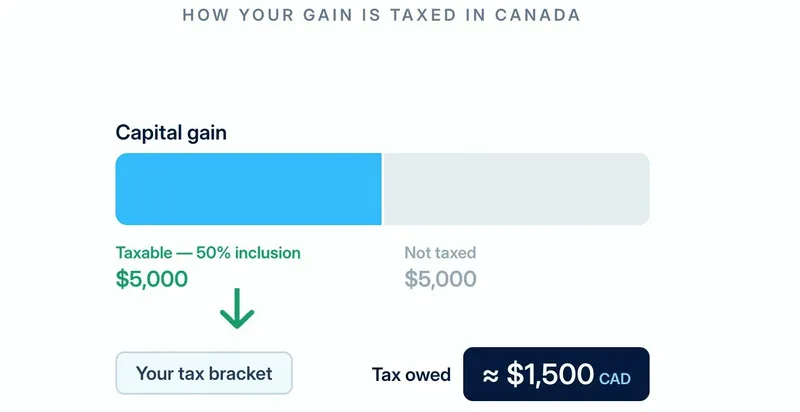
Capital gains are included in income at 50%. The proposed two-thirds rate on gains above CAD 250,000 was cancelled on 21 March 2025. If the CRA views the activity as a business, which turns on frequency, holding period and intent, 100% of the profit is taxable as business income. Cost is tracked as adjusted cost base (ACB), averaged across all units of the same coin. The superficial loss rule denies a loss if the same coin is repurchased within 30 days before or after the sale.
Price is only one source of loss. Process errors cost Canadian buyers money on calm market days too, and they repeat:

Mikko has been writing about money since 2015, covering payment services, trading platforms and crypto for readers in several markets. He leads exchange and wallet reviews at CryptoInfoBase.
Canada taxes 50% of crypto capital gains and 100% of business income. How to calculate ACB, fill in Schedule 3 and T1135, and what CARF changes from 2027.
Argent (now Ready) wallet review: Starknet smart accounts, email and guardian recovery, two disclosed bugs with zero funds lost, the card shutdown, ratings.
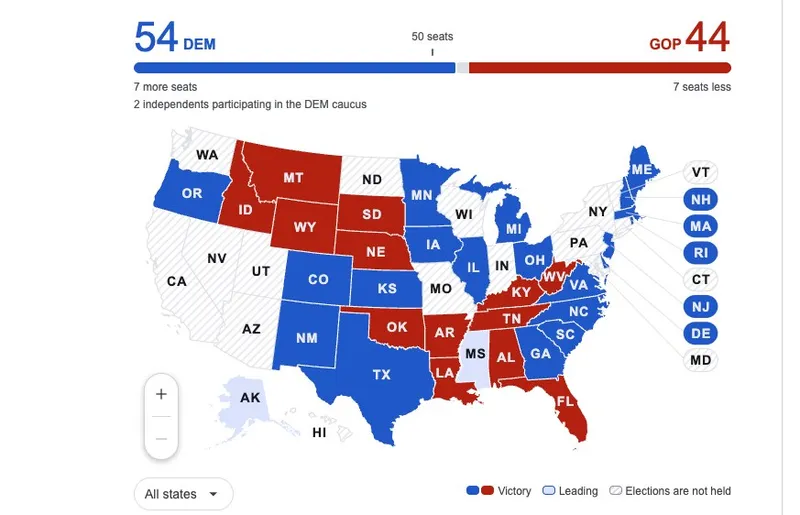
3.8Bitcoin fell below $76,000 on 4 November 2026 as Democrats won both chambers of Congress, then rebounded above $78,000. What it means for the CLARITY Act.