Axis Robotics Review 2026: AXIS Token, Prospects and Reviews
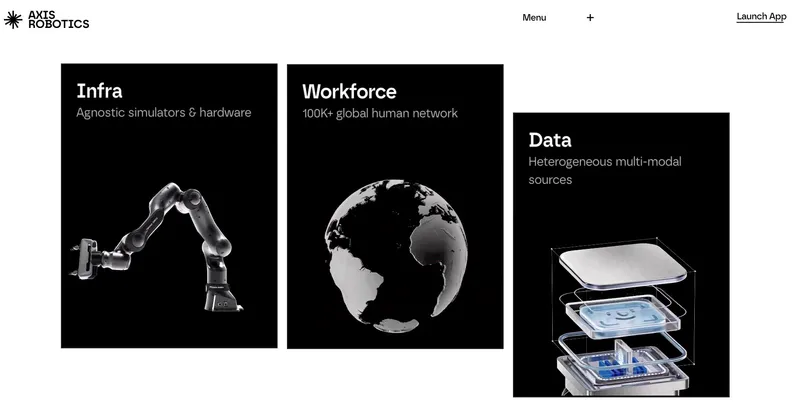
Axis Robotics pays contributors in AXIS for robot training data on Base. We review its 7M trajectories, tokenomics, the October 2026 sell-off and user feedback.
Ritual launched its AI-native Layer 1 and the RITUAL token on 26 October 2026, with 18% of 10 billion tokens circulating. Tech, tokenomics and risks.

By Mikko Mikailov6 min read

Ritual is an AI-native, EVM-compatible Layer 1 built by a team of former Polychain Capital partners, and its token RITUAL went live with the mainnet on 26 October 2026. One week later, on 2 November 2026, RITUAL traded at $0.02074 with a $37.3 million market cap and an implied $207 million fully diluted value (CoinGecko). The technology has three years of development behind it. The network has seven days of mainnet history, no public audit, and 82% of its supply still locked.
Product maturity
3.1/5
3.1Infernet has run since 2023, but Ritual Chain mainnet only went live on 26 October 2026.
Risk profile
2.6/5
2.6No supply cap, no published audit, and insider vesting starts in October 2027.
Our assessment
Ritual brings a funded, publicly known team and three years of infrastructure work to a mainnet that is one week old. The design is coherent and the tokenomics are disclosed, but there is no public audit, no usage data from mainnet yet, and 82% of the supply is still locked.
What stands out
What holds it back
Key facts
Ritual's thesis is that smart contracts and AI agents should call AI models the way they call any other function, inside the chain rather than through an outside service. The project reached that point in two stages.
The first product, Infernet, launched in 2023 as an oracle network for AI inference. A smart contract on Ethereum, Base or Arbitrum sends a request, an Infernet node runs the model off-chain, and the result returns to the contract. Infernet works on existing chains without changes to them. In our interpretation, it was the proof of concept that also showed its limits: an oracle sits outside the chain's consensus, and every call adds a trust step.
The second stage moved AI execution into the protocol. Ritual Chain entered a private testnet in November 2024, opened gated testnet phases in April and June 2026, and launched on mainnet on 26 October 2026. Ritual describes these features:
Testnet figures differ by source. TradingView reported 40 million+ testnet transactions, and the Foundation's materials cited by KuCoin mention 90 million transactions and 2,000+ agents. Neither figure is mainnet usage.
Ritual's founders are public. Niraj Pant, formerly a general partner and head of investments at Polychain Capital, and Akilesh Potti, a former Polychain partner who worked on machine learning at Palantir, started the company in 2023.
The funding record, by date:
Advisors include NEAR co-founder Illia Polosukhin, Gauntlet founder Tarun Chitra and BitMEX co-founder Arthur Hayes.
Governance starts centralized, and the Foundation says so. At launch the Ritual Foundation and core developers hold protocol decisions. The plan targets non-binding staker input from month 6 to 12 and binding staker votes from month 12, which the Foundation describes as targets rather than deadlines.
RITUAL is the gas token of Ritual Chain. It pays for transactions, model calls, HTTP requests and scheduled executions, and it secures the network through staking. The initial supply is 10 billion tokens with no maximum cap.
The Foundation's published allocation:
| Category | Share | Tokens |
|---|---|---|
| Core contributors | 29% | 2.90 billion |
| Ecosystem growth and R&D | 25% | 2.50 billion |
| Network participation and future incentives | 14% | 1.40 billion |
| Labs investors | 11.3% | 1.13 billion |
| Ritual Foundation | 10% | 1.00 billion |
| Labs treasury | 5% | 500 million |
| Frontier AI grants | 4.7% | 470 million |
| Foundation private sale | 1% | 100 million |
At launch 1.8 billion RITUAL, or 18%, entered circulation from the ecosystem, Foundation treasury and airdrop buckets. Core contributor and investor tokens, 40.3% of supply together, are locked for one year from launch and cannot be staked while locked. The full supply is released within four years.
Staking rewards start at 5% annual issuance, paid to validators, AI executors and delegators. Base fees are burned under an EIP-1559 model. Whether supply grows or shrinks depends on how much fee activity the chain attracts. With no usage history, the burn side of that equation is unknown.
The community airdrop was small by industry standards. 50 million RITUAL, or 0.5% of supply, went with no lockup to 852 eligible wallets of Infernet node operators, Frenrug users and long-term community members. By 27 October, 403 users had claimed 20.7 million tokens (Phemex). The Foundation says it screened for Sybil activity and rewarded verifiable work rather than last-minute farming.
Ritual has no revenue model outside its token. Every service on the chain is paid in RITUAL, and the network's economics rest on three flows:
The dependence runs both ways. Demand for RITUAL requires developers to deploy agents that pay for inference, and the security of the chain requires RITUAL to hold enough value to make staking meaningful. TVL concentration cannot be assessed yet. We found no TVL figure for Ritual Chain on public trackers as of 2 November 2026.
The market's verdict on week one was harsh. RITUAL's first trade took place on Uniswap v4 on 26 October (Messari), and Coinbase opened RITUAL-USD spot trading the same day after placing the token on its listing roadmap on 16 September. MEXC listed a RITUAL/USDT pair as well.
Phemex recorded a launch-day high of $0.08. By 2 November the price was $0.02074, down 74% from that high, with $833,645 in 24-hour volume and a CoinGecko rank of #558. Not surprisingly for a token with 18% of supply liquid and a 29% team allocation on a clock, the gap between market cap and FDV dominates the discussion. Market cap is 18% of FDV.
Airdrop recipients sold. Early traders sold. And there was not much on the chain yet to buy for.
These risks follow from what is known on 2 November 2026:
Coinbase lists RITUAL only in supported jurisdictions and has not published which ones. On Coinbase Canada, CSA terms for registered platforms cap net purchases of non-exempt crypto assets such as RITUAL at $30,000 over 12 months for retail investors who are not eligible or accredited. For tax purposes, Canadian practitioners treat airdropped tokens as income at fair market value on receipt. The CRA treats each later sale or swap as a disposition measured in CAD.

Mikko has been writing about money since 2015, covering payment services, trading platforms and crypto for readers in several markets. He leads exchange and wallet reviews at CryptoInfoBase.
Axis Robotics pays contributors in AXIS for robot training data on Base. We review its 7M trajectories, tokenomics, the October 2026 sell-off and user feedback.
Ash Crypto (@AshCrypto) has 2.1 million X followers. We check his bio, the net worth claims, his public market calls and the May 2026 ZachXBT allegations.
Binance customers pulled a net $4.72 billion after withdrawals reopened on 1 November 2026. What happened, who the FBI blames, and why bitcoin held at $78,000.