Ondo Price Prediction 2026, 2027, 2030: Bear, Base and Bull
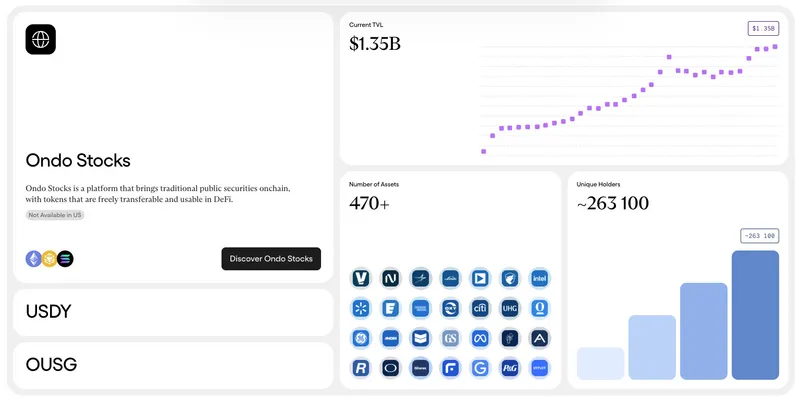
ONDO traded at $0.41 on 1 November 2026. We compiled 8 dated forecasts into bear, base and bull cases for 2026, 2027 and 2030, with the triggers for each.
ZEC traded at $1,243 on 2 November 2026. We compare 7 published forecasts and set out bear, base and bull cases for 2026, 2027 and 2030, with their triggers.

By Mikko Mikailov7 min read
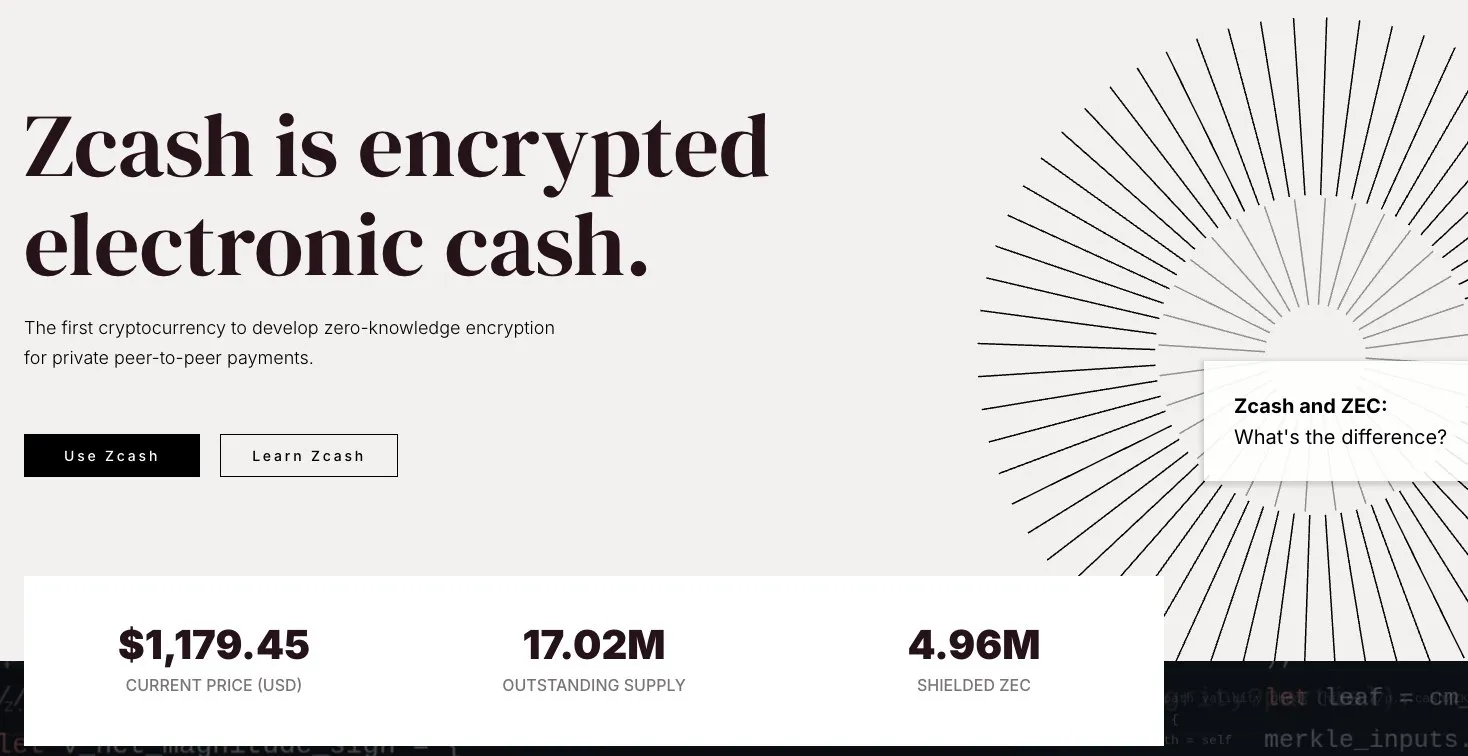
Zcash (ZEC) traded at $1,243 on 2 November 2026, 199% above its price a year earlier and 25% below the 26 September closing high of $1,653.12 (CoinGecko, Crypto.com). Forecasts published after the September rally put the 2027 median at $1,650, with a bear case at $750 and a bull case at $2,900. Three dated events decide which path the market takes: the NU7 hard fork on 5 November 2026, the coinholder grants vote from 17 to 29 December 2026, and the EU ban on privacy coins at licensed platforms from 10 July 2027.
Zcash (ZEC) price and forecast
Loading price
| Year | Bearish | Base case | Bullish | Base vs today |
|---|---|---|---|---|
| 2026 | $950.00 | $1,350 | $1,800 | |
| 2027 | $750.00 | $1,650 | $2,900 | |
| 2030 | $650.00 | $2,250 | $3,500 |
The forecast for this coin is being updated for the new year.
The 2026 rally did not start from strength. On 7 January all Electric Coin Co. staff resigned after a dispute with the board of its nonprofit parent, Bootstrap (The Block). By 8 March ZEC had closed at $197.12, 72% below its November 2025 level. Then came the bug. On 29 May a researcher hired by Shielded Labs found a flaw in the Orchard shielded pool that would have allowed counterfeit ZEC, and on 4 June the price lost 31% in 24 hours, to $409.64. The patch shipped on 1 June. Confidence took longer.
What followed looked like a regime change rather than a bounce. Grayscale converted its Zcash Trust into ZCSH, the first US spot Zcash ETF, which opened on NYSE Arca on 25 August 2026. ZEC crossed $1,000 on 4 September for the first time since 2016 and closed at $1,653.12 on 26 September. From the March low that is an 8.4x move in under seven months.
October reversed part of it. ZEC fell 11% in the week to 8 October after Ethereum researcher Justin Drake warned that AI could speed up attacks on wallet keys (CoinDesk), and Binance printed $1,124 on 13 October. In late October a public fight over the Zcash Community Grants treasury, which its dashboard lists at 91,452.98 ZEC, coincided with whale selling. The price failed at $1,390 and settled between $1,220 and $1,245.
Positioning as of 2 November 2026 shows where the pressure sits:
In our interpretation, the derivatives line matters more than the price. Open interest equals 4.4 times daily spot volume. A market built on that ratio moves fast in both directions, and October showed the downside half.
Each scenario below is a set of conditions, not a date-stamped call. The targets come from the forecast block above.
The bear case assumes the September high was a cycle top. The conditions behind it:
Signals that point here are a daily close below the $1,100 to $1,125 zone that held on 13 October, and ZCSH cumulative net inflows falling below the $152.25 million recorded on 19 October. A leveraged market rarely falls in a straight line. It falls in liquidation clusters, and $2.54 billion of open interest is enough fuel for more than one.
The base case reads 2026 as a re-rating that holds. CoinStats describes it as a $1,000 to $1,500 band through 2027 with open interest stabilizing near its 90-day average. The conditions behind it:
The signal to watch is the second ETF. A Winklevoss-backed filing proposes a 0.25% fee, one tenth of ZCSH's 2.5%, and a cheaper product would test whether institutional demand exists at a lower cost of entry.
The bull case requires ETF demand to return to its September pace. ZCSH took in $112.12 million on 8 September alone. The conditions behind it:
Under this path the September high becomes a floor, not a ceiling.
Among the forecasts we used, the gap between the lowest low and the highest high is 6x for 2027 and 38x for 2030. The table lists the sources used, with publication dates.
| Source | Published | 2026 | 2027 | 2030 |
|---|---|---|---|---|
| CoinStats | Oct 2026 | $900 to $1,450 | $700 to $2,000 | $1,000 to $3,500 |
| CryptoTicker | Oct 2026 | $994 to $2,448 | Not published | $278 to $10,702 |
| Cryptopolitan | Oct 2026 | Up to $1,800 | $1,150 to $2,050 | Not published |
| CoinDCX | Oct 2026 | $1,370 (October target) | $2,600 target | Not published |
| StealthEx | Q4 2026 | Not published | $705 to $2,875 | Not published |
| The Crypto Times | 23 Sep 2026 | Not published | $1,400 to $4,200 | $4,800 to $18,000 (excluded) |
| PrimeXBT | 26 Aug 2026 | $763 to $1,026 | $848 to $1,719 | $1,015 to $1,885 |
Not surprisingly, the oldest model in the set sits at the bottom of every range. PrimeXBT built its 2026 view when ZEC traded at $850, and the price passed its 2026 maximum within two weeks. Two institutional theses sit outside any model. Grayscale estimates ZEC at 0.3% of "currency" crypto and notes that a 5% share implies an 18x re-rating. Arthur Hayes frames a path to ZEC at 10% of Bitcoin's market cap. Neither enters our calculation.
We collected forecasts published between 26 August and 2 November 2026 and applied four rules:
The 2027 figures rest on 6 sources. The 2030 figures rest on 3, which makes them the weakest part of this page.
Four risks apply whichever scenario is in play. Each comes with a date or a number, and none of them is priced into the forecasts above.
Article 79 of the EU Anti-Money Laundering Regulation applies from 10 July 2027. From that date licensed crypto-asset service providers in the EU are barred from handling anonymity-enhancing coins, and ZEC falls into that category. Holding ZEC in self-custody stays legal. Trading it on a regulated European platform does not. In our interpretation, European liquidity could leave in the months before the deadline rather than on the day itself, as exchanges move the coin to withdraw-only status.
Binance carries 17.11% of ZEC spot volume (CoinGecko, 2 November 2026). On 29 October the exchange lost $6.3 billion in a hot-wallet hack and paused withdrawals across networks (TechSpot). A pause at one venue of that weight removes a sixth of spot liquidity at once. Mining shows the same pattern. Foundry launched a Zcash pool on 13 April 2026 and soon held 30% of hashrate (CoinDesk).
The Orchard counterfeit flaw went undetected until May 2026, four years after the pool went live with NU5. NU7 now changes consensus timing on a shortened schedule. A second flaw of that class would arrive at a worse moment than the first, with $2.54 billion of leveraged positions open against the spot market.
The 8% grants stream and the 12% coinholder fund both end at the third halving in 2028 (Forklog). What replaces them is undecided. Surprisingly, this gets less attention than ETF flows. A protocol whose development budget expires in two years, during a public fight over $124 million, has a roadmap that depends on a vote that has not happened yet.

Mikko has been writing about money since 2015, covering payment services, trading platforms and crypto for readers in several markets. He leads exchange and wallet reviews at CryptoInfoBase.
ONDO traded at $0.41 on 1 November 2026. We compiled 8 dated forecasts into bear, base and bull cases for 2026, 2027 and 2030, with the triggers for each.
Ash Crypto (@AshCrypto) has 2.1 million X followers. We check his bio, the net worth claims, his public market calls and the May 2026 ZachXBT allegations.
Axis Robotics pays contributors in AXIS for robot training data on Base. We review its 7M trajectories, tokenomics, the October 2026 sell-off and user feedback.