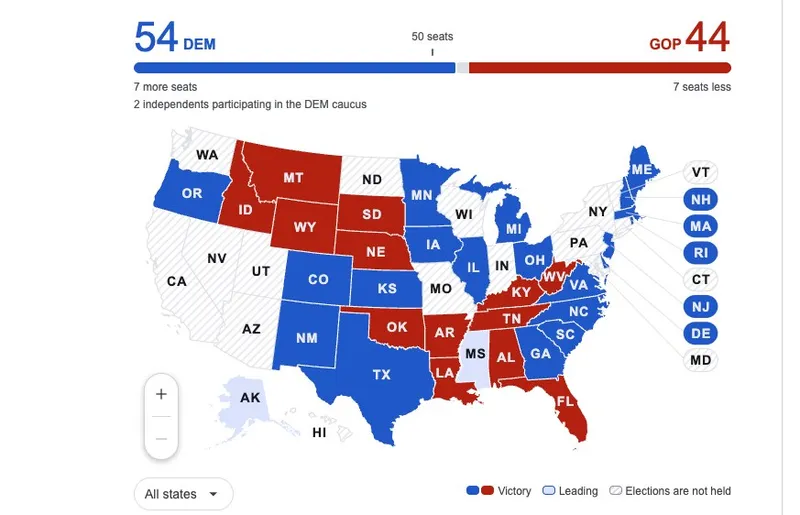
Bitcoin Rebounds Above $78,000 After Democrats Win Congress
Bitcoin fell below $76,000 on 4 November 2026 as Democrats won both chambers of Congress, then rebounded above $78,000. What it means for the CLARITY Act.
Samsung switched on Stablecoin Accounts in Samsung Wallet on 5 November 2026: USDC on Solana for US Galaxy users, payouts in 60+ countries, 4% card top-ups.

By Mikko Mikailov4 min read
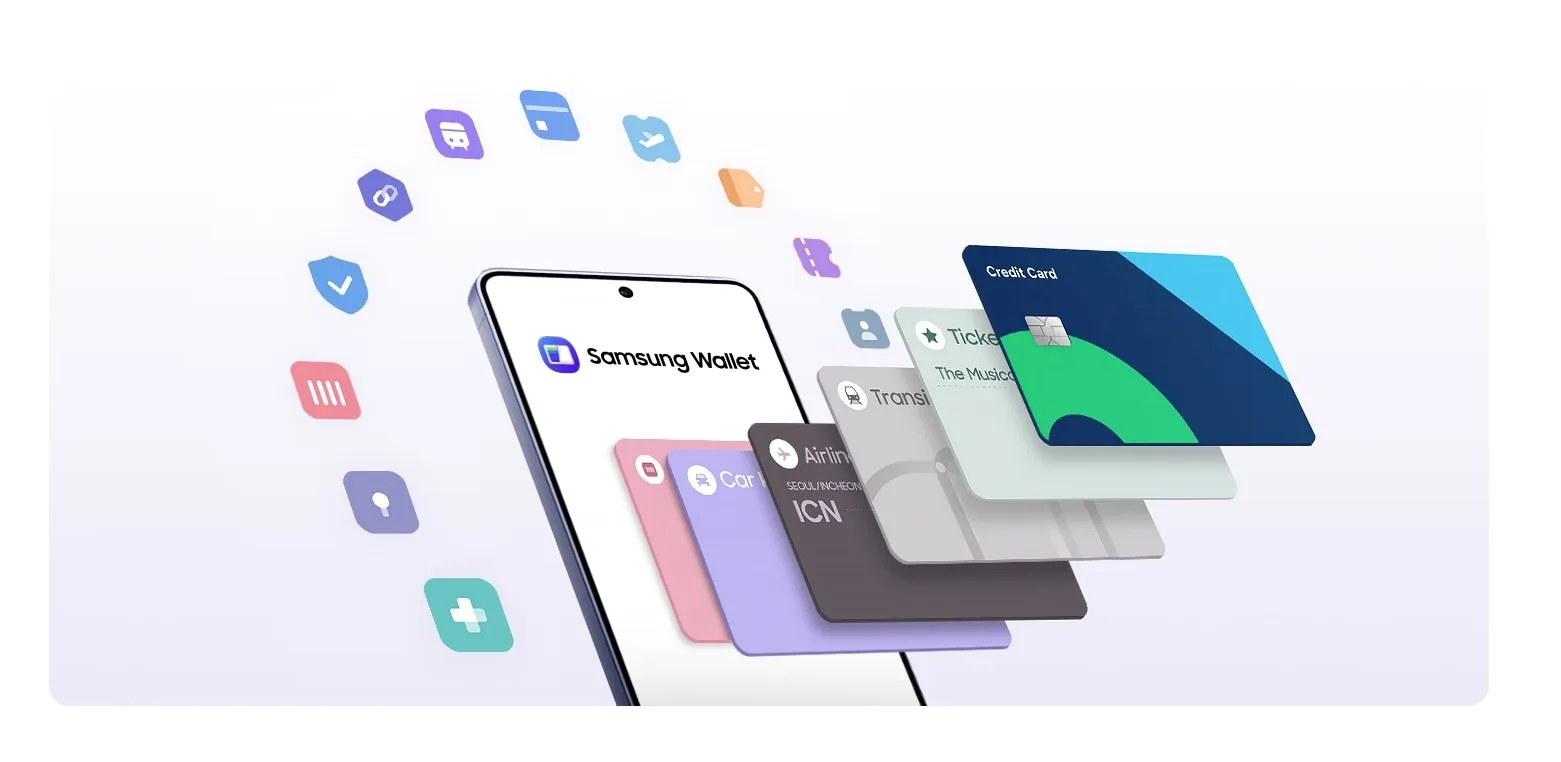
Samsung switched on Stablecoin Accounts in Samsung Wallet for eligible users in the United States on Thursday, 5 November 2026. The feature lets Galaxy owners buy, hold and send Circle's USDC on the Solana blockchain inside the preinstalled wallet app, with no separate crypto app and no private keys to manage. Samsung puts the compatible base at 82 million Galaxy devices in the US.
The launch closes a sequence that began in July. At Galaxy Unpacked in London on 22 July, Samsung showed a mockup of a USDC balance in its wallet but named no issuer, blockchain or date. On 7 October it confirmed USDC, Solana as the main network and a launch in the last week of October. The accounts went live five days after that window closed.
The account works as a dollar balance inside the same app that holds payment cards, boarding passes and digital IDs. Access requires a Samsung Account, a compatible Galaxy device on Android 13 or later, identity verification and biometric setup. The service is open to US residents aged 18 or older, except residents of New York.
At launch the account supports these functions:
Samsung has not published the full list of destination countries. It has said it will explore stablecoin payments online and at physical stores, and expansion to other markets, both subject to local regulation.
Samsung does not hold customer funds. The account is built with Bastion, a licensed stablecoin custodian and infrastructure provider. Coinbase safeguards the USDC as Bastion's sub-custodian in Coinbase Prime Vault. Samsung describes the product as a crypto wallet, not a bank account, so the balance is not a bank deposit.
The fee schedule at launch, per Decrypt's 5 November report, is this:
| Action | Fee |
|---|---|
| Credit card top-up, including via Samsung Pay | 4% |
| Transfer to another US Samsung Wallet user | No Samsung fee |
| Transfer to an external crypto wallet | No Samsung fee. The receiving platform sets its own fees |
| Payout to a bank account in 60+ countries | Varies by destination |
| Withdrawal to a US bank account or debit card | Fee applies, amount not disclosed |
The 4% top-up fee is the figure to watch. On a $500 transfer abroad, the sender pays $20 to load the balance before any payout fee at the destination. Samsung also offers $25 in USDC to new users whose first top-up is $50 or more.
The custodial model is a deliberate trade. Users never see a seed phrase, which removes the step where newcomers lose access to funds through a lost or exposed phrase. They also give up control of the keys, the feature that self-custody products such as the Argent wallet build on. Any USDC sent out to an external wallet leaves Samsung's custody chain at that moment.
The significance lies in distribution, not in technology. Stablecoin transfers on Solana have worked for years. What has limited consumer use is the sequence of steps a newcomer faces: download an app, open an exchange account, pass a second identity check, learn to handle keys. Samsung removes those steps for anyone who already owns a compatible Galaxy phone.
The 82 million figure needs a careful reading. It counts compatible devices, not active Samsung Wallet users and not expected sign-ups. A small share of that base would still be one of the largest consumer stablecoin channels outside a crypto exchange. Remittances are the obvious first use: a US sender pays in USDC, and a recipient abroad receives local currency in a bank account without touching crypto.
The partner structure also shows where the market has moved. A phone maker, a licensed custodian, a listed exchange acting as sub-custodian and a public blockchain now sit in one consumer flow. This follows Samsung Wallet's October 2025 integration of Coinbase services for US users. It also follows the GENIUS Act, the US federal stablecoin law signed in July 2025, which gave issuers and their partners a defined set of rules to work within.
Open questions remain. Samsung has not disclosed bank payout fees by country, so the full cost of a transfer abroad is unknown until a user tests a specific route. Whether in-store payments follow, and in which markets, is still unannounced. Canadian Galaxy owners have no access for now. In Canada, USDC remains available through registered crypto trading platforms, covered in our guide to buying and selling crypto in CAD.

Mikko has been writing about money since 2015, covering payment services, trading platforms and crypto for readers in several markets. He leads exchange and wallet reviews at CryptoInfoBase.
Bitcoin fell below $76,000 on 4 November 2026 as Democrats won both chambers of Congress, then rebounded above $78,000. What it means for the CLARITY Act.
Binance's incident report shows how hackers used a fake job interview, malware and an internal AI tool to steal $6.3 billion. $5.28 billion left in 46 hours.
Binance customers pulled a net $4.72 billion after withdrawals reopened on 1 November 2026. What happened, who the FBI blames, and why bitcoin held at $78,000.